Motor Neuron diseases
We offer a diverse porfolio of motor neuron disease models designed to accelerate preclinical discovery. This includes patient‑derived iPSC lines, gene‑edited models carrying disease-associated mutations, and matched isogenic controls.
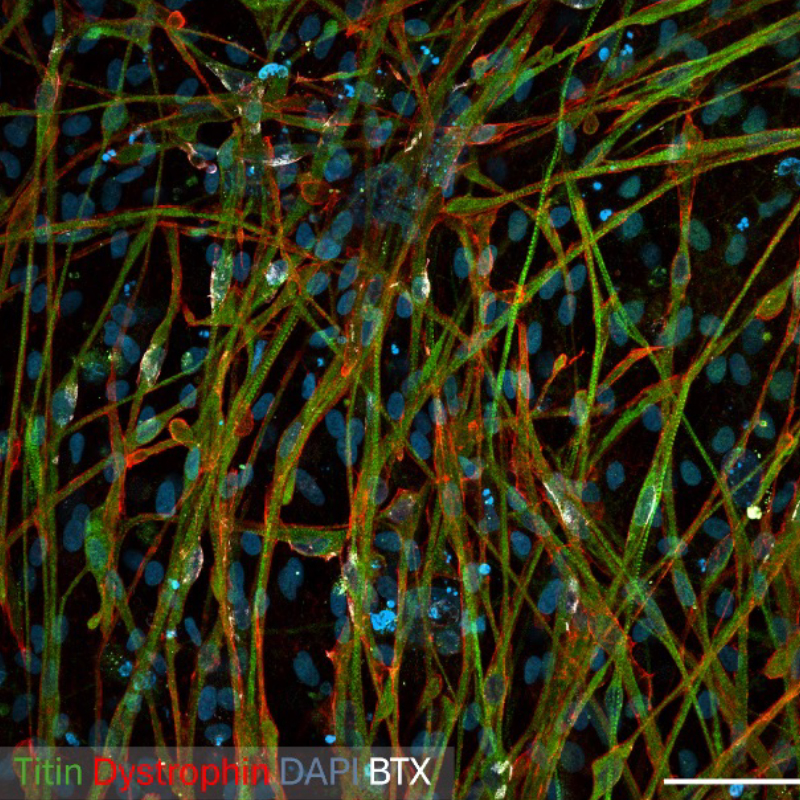
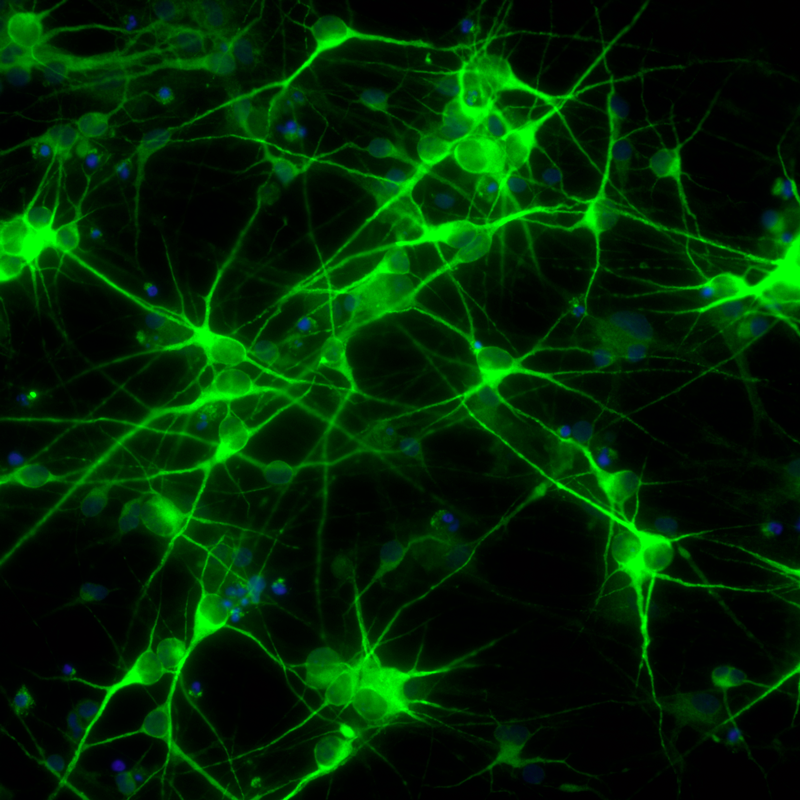
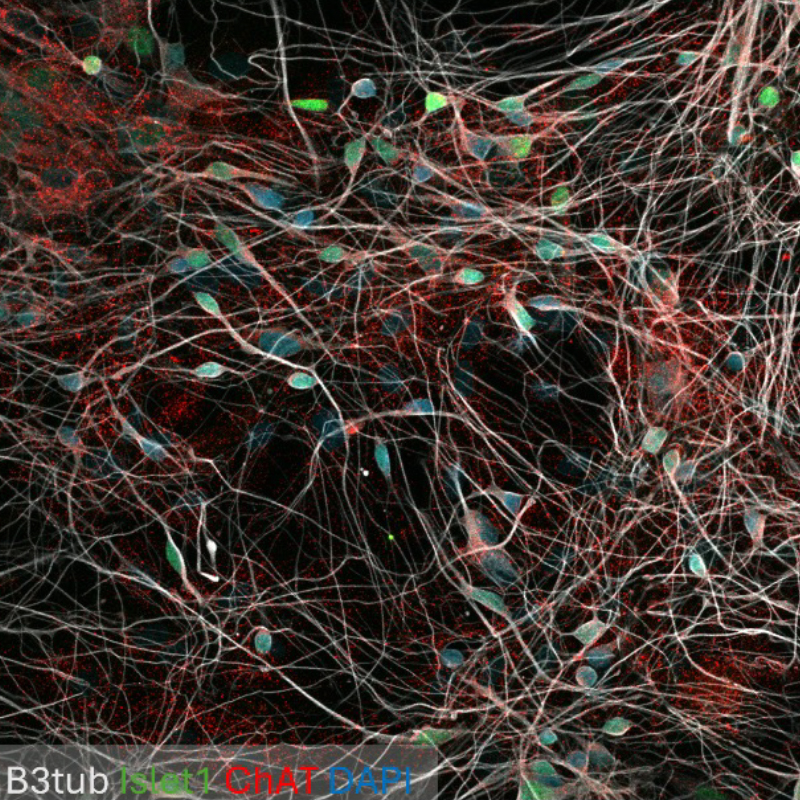
Using small-molecule patterning combined with NGN2-driven differentiation, we reliably generate Hb9/MNX1-positive lower motor neurons. These neurons are extensively characterized and can be cultured as monolayers or in co-culture with human iPSC-derived muscle cells to study neuromuscular junction formation, stability, and degeneration (Guerra San Juan et al., Neurobiology of Disease, 2025).
Through systematic functional profiling, we have esthablished a high‑quality reference dataset of motor neuron phenotypes, enabling rapid, reproducible, and quantitative evaluation of therapeutic candidates.
ALS-Relevant Phenotypic Analyses
Our platform enables multiparametric characterization of ALS phenotypes, including:
- Motor neuron survival and degeneration kinetics
- Neuronal network activity and excitability
- Axonal outgrowth, degeneration, and regeneration
- Axonal transport of mitochondria, RNA granules and other organelles
- Neuromuscular junction formation and maintenance
- Synaptic connectivity and vesicle release
- TDP-43 mislocalization, aggregation phenotypes and TDP-43 driven splicing defects
- Cellular stress responses and stress granule dynamics
These readouts allow quantitative assessment of disease mechanisms, target engagement, and functional rescue by therapeutic compounds.
Available IPSC disease models
- Extensively validated control iPSC lines
- IPSC lines containing UNC13A risk SNP variants that enhance cryptic exon inclusion upon TDP-43 loss
- Patient-derived iPSC lines from familial or sporadic ALS cases
- Gene-edited lines with patient mutations and matched isogenic controls (TARDBP, FUS, GRN, KIF5A, and MAPT).
Model characterization
All models undergo extensive molecular, morphological, and functional validation, including:
- neuronal network activity measurements
- axonal growth and regeneration assays
- organelle trafficking dynamics
- synaptic connectivity and neurotransmission
- neuromuscular junction formation and stability
This deep characterization enables reliable phenotypic benchmarking and robust efficacy testing of therapeutic candidates.
Human motor neurons
Human muscle